
缝纫机乐队
How China's new environmental code translates national ecological goals into everyday rules_我的网站

一 |
Editor's Note:
In early 2026, the phrase "Very Chinese Time" went viral on global social media platforms. Content centered around China's everyday life has been widely viewed and discussed, bringing the Chinese experience into the international public sphere in an extremely down-to-earth way. However, this phenomenon goes beyond mere online popularity - it is unfolding amid the ongoing reshaping of the global order and the accumulation of anxiety in Western societies. A deeper transformation is emerging, as China's lifestyle, pop culture and technological practices are increasingly recognized, discussed and used as references around the world.
This series uses "Very Chinese Time" as an observation lens to go beyond a single internet trend and systematically showcase how the Chinese experience is entering global everyday life. This is the sixth installment of the series.
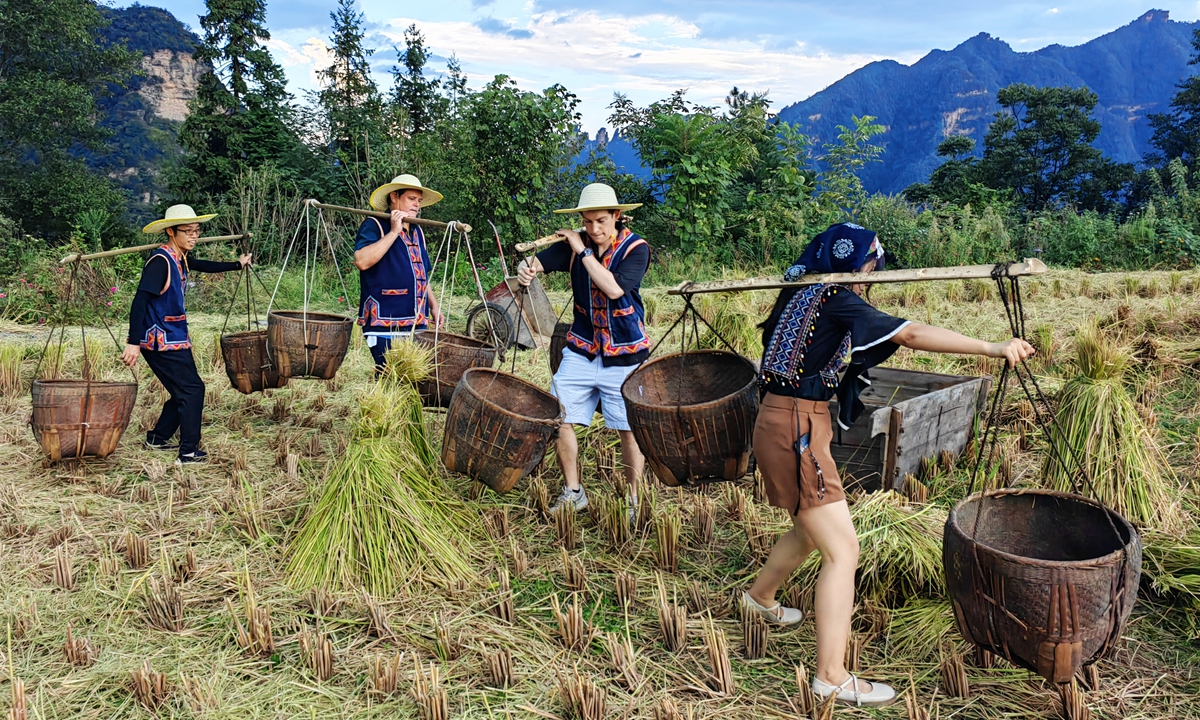
"This is way harder than any weights I lifted in the gym. I never felt so much pain and struggle as when I was carrying those watermelons," Kevin Loi-Heng could not help thinking as he learned to carry two baskets of watermelons on a shoulder pole, just as local farmers do.
The 29-year-old traveler from London had seen China's modern megacities on previous business trips. But two weeks spent working on farms in the countryside of Fenghua, Ningbo, East China's Zhejiang Province, gave him a chance to see a very different side of the country.
China's inbound tourism boom has continued into 2026. Inbound tourism maintained strong growth, while data from the National Immigration Administration showed that 22.91 million foreigners entered China in the first half of the year, up 20.4 percent year-on-year, according to a report about 2026 tourism market insights for the first half of the year released by the China Tourism Association.
As "China Travel" continues to trend across social media, a trip to Beijing, Shanghai, Guangzhou or Shenzhen is no longer the only way foreign visitors explore the country. Increasingly, they are heading into villages, farms and fields.
Videos posted by foreign travelers show visitors picking fruit, harvesting rice, feeding livestock, learning traditional farming techniques and simply spending time with local villagers.
Through these immersive rural experiences, they are discovering a different China, one that is earthy, vibrant and deeply human, a tourism expert told the Global Times.
See a different side
Kevin's own company focuses on research into sustainable agriculture and soil health, so working with the land was not entirely unfamiliar territory. Yet he found that China's countryside taught him a great deal.
"One question I had before coming to China to do farm work was: With 1.4 billion people, how does China feed all of its people?" Kevin told the Global Times. "I had this picture in my head that China was very large, and that remote rural communities would have different ways of living and different land practices. I wasn't sure if they would accept a foreigner like me."
The fact is, this land welcomed everything.
To get to the mountain fields and start working, Kevin and his fellow participants would get up as early as 4 am and begin working by 6 am. They picked local white peaches, harvested watermelons and dug up peanuts.
Beyond picking crops, Kevin helped prepare the land and soil, plant seasonal crops such as chilies, prune overgrown trees and clean up farmland. He also fed pigs, chickens, ducks and geese, checked agricultural equipment at the local rural market and spoke with farmers and agricultural workers about the challenges they face in their daily lives.
"One of the first tools I used was a backpack sprayer. It was actually very practical," he recalled.
Kevin said the experience broadened his understanding of China. "I saw that the working people are very humble, but also very hardworking."
Over the past year, China's countryside has emerged as a new growth area for inbound tourism.
According to data released by Trip.com, a large online travel agency, on February 11, its affiliated rural resort farms saw inbound tourism bookings increase by more than 50 percent year-on-year in 2025, while the number of room nights booked by international visitors rose by more than 75 percent. "Visiting the Chinese countryside" is becoming a new option for international travelers who once focused overwhelmingly on major cities. Singapore, the US, Australia, Germany and Malaysia were among the major source markets.
Many overseas vloggers are turning their lenses toward China's countryside, hoping to find a different perspective from which to observe the country.
In March, US content creators Ludwig and Michael were cycling through a village in Central China's Hunan Province, when they encountered villagers preparing for a traditional funeral. Mistaking the gathering for a busy restaurant and the people dressed in white mourning clothes for cooks, they initially misunderstood what was happening. But rather than being offended, a local villager surnamed Li invited the two travelers into his home for a meal. The three chatted about their cycling adventures along the way and eventually sang a song together before parting ways.
After Ludwig uploaded the footage to YouTube, the video received more than 2 million views, offering overseas audiences an unexpected glimpse into culture in a Chinese village.

The appeal of countryside
As overseas audiences increasingly encounter images of China's highly modernized cities across various online platforms, some travelers are showing greater interest in experiences that offer a sense of authenticity, simplicity and contrast, Zhang Lingyun, a professor and the executive editor-in-chief of Tourism Tribune journal, told the Global Times.
After Kevin showed the video on social media, a lot of his friends found it quite unexpected. "They found it interesting and funny. One of my friends remarked, 'You're always doing side quests,' and said he wished he could live an adventurous life like me," Kevin recalled.
The criteria by which travelers evaluate an experience have changed, Zhang emphasized.
Zhao Mai, an English-speaking tour guide who works extensively with international visitors, has observed this shift firsthand.
Zhao told the Global Times that many young foreign travelers are increasingly interested in participating in everyday activities and interacting directly with local people rather than moving from one landmark to another.
There is another attraction: value for money. China's rural tourism destinations can offer international visitors a combination of affordability, quality and variety that is difficult to match, Zhao said. The diversity of China's countryside is also a major advantage.
In 2025, among the hundreds of "best tourism villages" selected by UN Tourism, China alone accounted for 19, spanning a vast geographical range from the eastern coastal regions to the western plateaus, and from the water towns of Jiangnan to the mountain villages of the southwest, according to the CCTV News.
But Zhao believed the most important factor is still the rise of experiential tourism itself.
"Experiential tourism has become one of the key forces driving the global tourism industry," he said. "And that is where China's countryside has a natural advantage. Rural areas in China offer natural scenery, local traditions, community life and opportunities for deeper participation."
Kevin said working in the village in Zhejiang gave him a new perspective on self-sufficiency and sustainable living.
The experience was so meaningful that he returned to China for a second trip, this time spending another two weeks doing agricultural work in Qufu, East China's Shandong Province.
A teacher living in the local Confucius Institute community spoke to him about the "qi" of the soil, an idea that, Kevin noted, is largely unfamiliar in the Western context.
"In the West, I was accustomed to explanations and theories in which soil is seen simply as a resource with physical and chemical properties that can be exploited," he said.
The trip helped him understand soil in a broader way, not merely as an agricultural resource, but as something essential to community life and health and as a connector between humans and the environment, or biosphere.
"I wish I could speak Chinese and understand local people's thoughts better, so I could learn more about Chinese rural agricultural life and local history," he said.
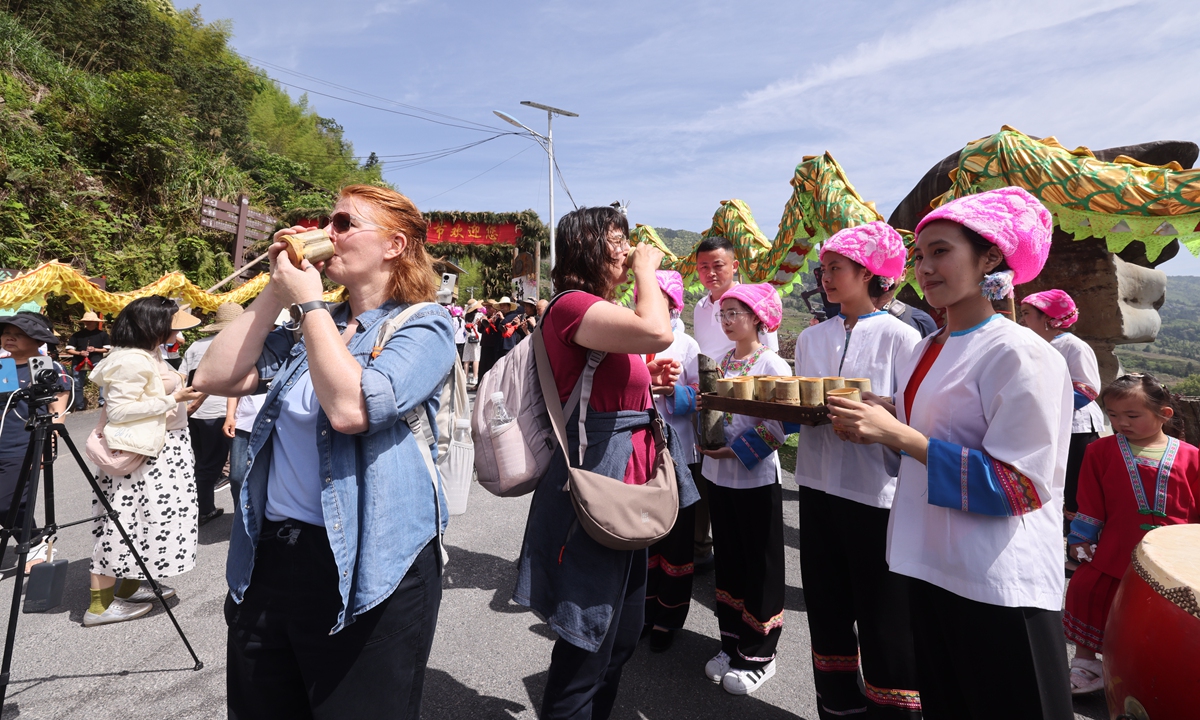
In May 2026, a village in Guilin, South China's Guangxi Zhuang Autonomous Region, held its annual Terraced Fields Plowing Festival. Across the layers of terraced fields, local residents demonstrated traditional farming practices, attracting visitors from both China and abroad, the news outlet chinanews.com reported.
He Chengxi, a deputy manager of the media department of Guilin Longji Tourism Co., Ltd., told the Global Times that foreign visitors are particularly drawn to this immersive experience as they are intrigued by this traditional method of farming, and found Chinese farming culture novel and meaningful.
And social media shows that the phenomenon goes beyond short-term tourism. For example, some foreigners who have married Chinese partners have shared their enjoyment of rural life online.
From tourism traffic to lasting connections
Zhao believes the growing interest in rural tourism should be viewed against the broader backdrop of China's efforts to revitalize the countryside and integrate agriculture, culture and tourism.
China unveiled its "No. 1 central document" for 2026 on February 3, outlining plans to advance agricultural and rural modernization and to promote all-around rural revitalization, according to the Xinhua News Agency.
According to estimates from the data center of the Ministry of Culture and Tourism, China received 793 million rural tourism visits in the first quarter of 2026, up 12.2 percent year-on-year. Rural tourism revenue reached 457 billion yuan ($63.5 billion), up 10.9 percent, Xinhua reported.
The direct economic impact of foreign visitors to rural areas, however, is harder to measure. Zhang said it seems that that rural inbound tourism remains a relatively small trend amplified by social media rather than an established industry at scale.
Zhao believes their most important contribution may therefore be something less immediately measurable: international visibility.
There is also a less visible effect. The arrival of foreign tourists can prompt local residents to reconsider the value of their own everyday lives, Zhao noted.
"Farmers who are accustomed to regarding planting, harvesting and tending livestock as routine work may suddenly find outsiders treating those same activities as something worth traveling thousands of kilometers to experience," he said.
That outside perspective can give ordinary agricultural work, local food and traditional customs a new sense of value, not only as tourism products, but as elements of local identity, Zhang said.
How can this social media traffic be turned into lasting tourism demand? Zhang believed that the key might not be intervening too heavily in the specific products that villages offer, but improving the basic conditions that allow international visitors to access them.
The government's role, the expert suggested, is to help bridge the "last mile," making rural destinations easier and safer to reach and navigate, while leaving room for villages and travelers themselves to determine what kind of experiences are meaningful.
And beyond economics, Zhang said, these encounters carry cultural exchange value.
"People-to-people exchanges can help dispel misunderstandings and allow the world to see another side of China: ordinary Chinese people, like people everywhere, value peace, stability and a prosperous life. That deeper cultural encounter may ultimately be one of the most valuable things international tourism can offer," he explained.
Kevin has not stopped thinking about the people and places he encountered in China's countryside. The experience changed his impression of rural China and made him want to return and stay longer.
"I would like to know more about what other people who have experienced these agricultural activities think," he said. "Is now the time to reconnect with this ancient practice?"
。
"Building an ecological civilization concerns the well-being of the people and the future of the nation."
Chinese President Xi Jinping, also general secretary of the Communist Party of China Central Committee and chairman of the Central Military Commission, once pointed out: "Respecting, adapting to, and protecting nature is essential for building China into a modern socialist country in all respects."
In the 15th Five-Year Plan (2026-2030) for national economic and social development, securing major breakthroughs in strategic tasks of overall importance to Chinese modernization and making major new progress in the Beautiful China Initiative are key objectives.
The Global Times is launching a series of articles titled "BeautifulChinaING." From the perspectives of the beauty of nature, the beauty of systems and the beauty of lifestyles, the series uses both Chinese and international cases as entry points. Through field reporting and video storytelling, it explores how green development has become a defining feature of Chinese modernization while showcasing China's role as a responsible major country providing global public goods.
In this installment, we turn our focus to China's Ecological and Environmental Code and the changes it may bring to everyday life. From neighborhood noise and restaurant fumes to ecological conservation and green development, this article examines how the code brings scattered environmental rules into a unified framework, strengthens public participation and turns the vision of a Beautiful China into concrete rules for environmental governance.
A power drill starts in a neighboring apartment just as someone is trying to sleep. Cooking fumes from the restaurant downstairs drift through an open window. A modified car roars past a residential compound, while a food delivery arrives wrapped in layers of plastic. According to China's new Ecological and Environmental Code, these seemingly minor, everyday frictions - closely tied to how people live, sleep, cook, commute and consume - are precisely where environmental governance begins.
The code will take effect on Saturday. Spanning 1,242 articles across five books, it is China's second law to be formally titled a "code," following the Civil Code. It brings pollution control, ecological conservation and green and low-carbon development under one legal framework, while incorporating 10 existing laws.
Speaking at a press conference held on Thursday, Minister of Ecology and Environment Li Gao said that the Ecological and Environmental Code is of major and far-reaching significance for safeguarding the public's ecological and environmental rights and interests in accordance with the law, consolidating the legal foundation for building a Beautiful China, and accelerating modernization characterized by harmony between humanity and nature.
As China puts the vast environmental code into force, a practical question arises: How will it make daily life quieter, cleaner and easier to navigate - and turn the vision of a Beautiful China into rules that people can see, use and help enforce?
From doorsteps to ecosystems

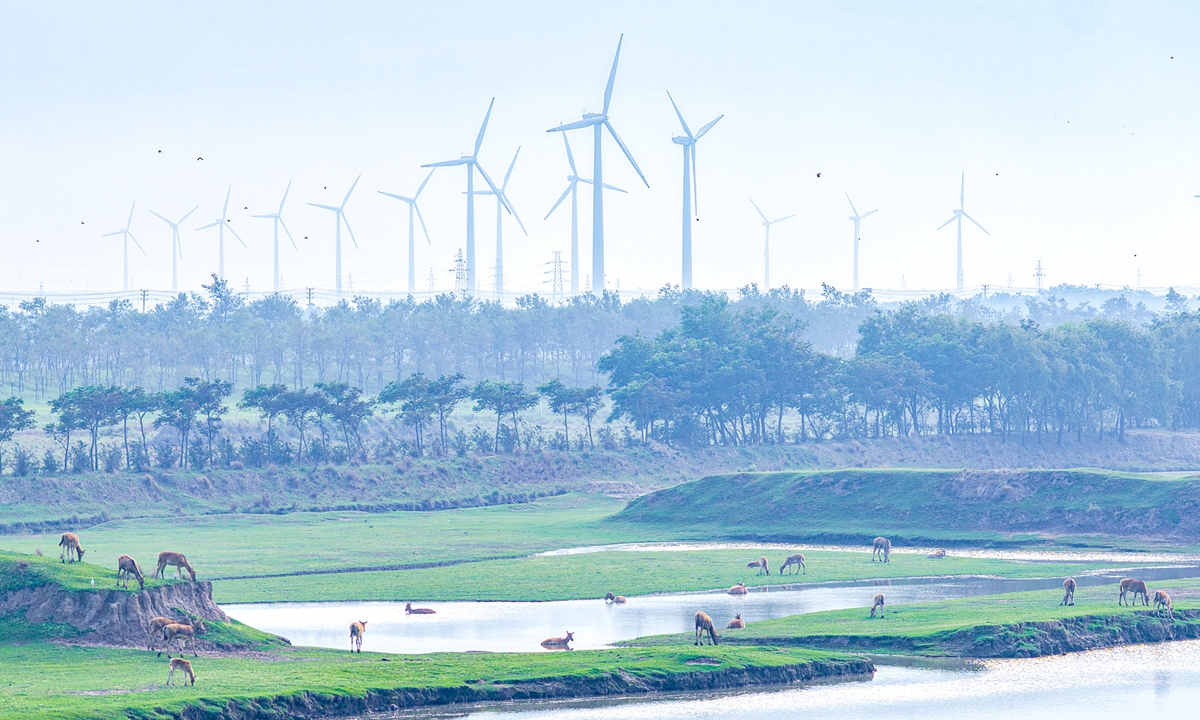
In Mengla county, Southwest China's Yunnan Province, elephant ranger Li Shengqian once walked through a large area of flattened cornfields. While local rangers were attending training, more than 40 wild Asian elephants descended from the mountains, ate the ripe sweet corn, rolled in a mineral-rich pond and then retreated into the forest to sleep.
A local forestry official told the Global Times that an insurance company would assess the damage and compensate the villagers.
Yunnan has gradually turned such compensation from an improvised response into an institutional arrangement. Under its wildlife-damage public liability insurance system, governments pay the premiums, affected farmers do not contribute, and insurers assess and compensate their losses.
By August 2024, Xishuangbanna had invested 225 million yuan ($33.3 million) in the scheme and paid 215 million yuan in compensation for wildlife damage, including 188 million yuan for losses caused by Asian elephants.
The code gives such practices a clearer legal foundation. Article 828 requires local governments in areas seriously affected by wildlife damage to combine compensation with preventive measures, including protective barriers, warning signs and monitoring and early-warning systems. It also stipulates compensation for deaths, injuries and losses to crops or other property resulting from the protection of specified wildlife. In this way, the cost of conservation is not left solely to those living closest to protected animals.
For environmental volunteers, the change may be felt in a different way. Yun Jianli founded the Green Hanjiang environmental group in Central China's Hubei Province in 2002 and has spent more than two decades investigating pollution along the Hanjiang River.
Yun said volunteers previously often had difficulty dealing with legal matters. "When dealing with some environmental issues, we often had to search across different laws to find a legal basis," she told the Global Times. "The new code integrates these systems, providing clearer and more authoritative legal support for environmental actions."
That support extends beyond a general recognition of participation. The code requires public consultations in environmental planning, standard-setting and impact assessments; mandates accessible reporting channels and feedback for real-name reports; and prohibits employers from retaliating against workers who report pollution by their own organizations.
For volunteers such as Yun, public participation is therefore no longer only an appeal to civic responsibility. It is positioned as a legally protected part of environmental governance.
After Saturday, the code's practical effect will be tested in equally concrete ways.
From blueprint to reality
Turning this wide breadth of laws into a single code requires more than collecting existing statutes. Lawmakers first had to decide which rules should be fully integrated, which specialized laws should remain in place and where new legal foundations were needed.
Compilation formally began on November 3, 2023. A leadership group coordinated major issues, a drafting task force handled the text, and an expert committee provided specialist input. The draft was reviewed twice as a whole and twice in separate books before it was adopted on March 12, 2026, completing a process of nearly two and a half years.
The approach was described as "moderate codification." Huang Wei, a deputy director of the Legislative Affairs Commission of the National People's Congress (NPC) Standing Committee and coordinator of the drafting task force, told the People's Daily that the aim was not to absorb every environmental law into one volume. Instead, different groups of laws were treated differently.
Ten laws covering environmental protection, environmental impact assessment, cleaner production and major forms of pollution control were revised and incorporated in full, and will no longer remain as separate statutes once the code takes effect. Core provisions from more than 20 other laws involving forests, grasslands, major river basins, national parks, energy and resource conservation were included while those laws were retained. For newer fields such as climate governance and the carbon-peaking and carbon-neutrality goals, the code establishes guiding principles while leaving room for more detailed legislation.
The code was also shaped outside meeting rooms in Beijing. In May 2025, Chinese and international students at a vocational university in Southwest China's Chongqing Municipality discussed the draft, with their suggestions sent to the national legislature through a grassroots legislative contact point, according to the Xinhua News Agency.
Ma Jun, director of the Institute of Public and Environmental Affairs, also took part in seminars organized by the Legislative Affairs Commission of the NPC Standing Committee and other departments during the code's drafting. His organization later submitted detailed proposals when the draft was released for public comment, he told the Global Times.
"The open legislative process was significant in itself, as it prompted broad public discussion of decades of environmental legislation and the major issues of our time," Ma said. "It has enabled the code to engage with cutting-edge international legislative theories while remaining grounded in the practical challenges China faces," Ma said.
During the four rounds of public consultation, more than 7,000 people participated and submitted over 20,000 comments. The drafting team conducted research in more than 30 localities and held 17 seminars in Beijing with national legislators, government departments, companies, social organizations and scholars, the People's Daily reported.
Suggestions from the public and grassroots contact points helped shape rules on emerging pollutants, urban greening, climate governance and legal liability. Following deliberations at the final NPC session, more than 200 additional changes were made, including over 100 substantive revisions, Xinhua reported.
Passing the code, however, did not automatically align the many rules beneath it. The Ministry of Ecology and Environment said it was reviewing more than 500 related documents, including over 30 administrative regulations, more than 80 departmental rules and over 400 normative documents. Provisions that conflict with, fail to connect with or no longer fit the code will be revised or repealed, while supporting rules and technical standards are being updated.
Innovative tools have also been used in preparation for the code's implementation. An AI-assisted system has been developed to address the difficulties and high costs involved in assessing ecological and environmental damage. The system has been piloted free of charge in 28 provincial-level regions and applied in more than 300 cases, reducing average assessment time by over 80 percent, according to the ministry.
Wider legal practice
Environmental codification is not unique to China. Sweden adopted its Environmental Code in 1998 and brought together rules previously contained in 15 acts. It then entered into force on January 1, 1999. France issued the legislative part of its Environmental Code in September 2000. Germany also attempted to establish a unified environmental code, but the project stalled in 2009.
In terms of the Ecological and Environmental Code of China, an article published in the international journal Carbon Research described it as a systemic response to the interconnected crises of pollution, biodiversity loss and climate change, while also identifying incomplete supporting rules, uneven legal coordination and limited public awareness as implementation challenges.
An editorial by the People's Daily published on Thursday noted that the enactment of the Ecological and Environmental Code signifies a major transformation in China from a participant to a leader in global environmental governance, providing a legislative model that can be studied by countries around the world, especially developing countries.
Lu Weifu, a researcher at the University of Science and Technology of China, wrote in an article published by China Environment News that the code's distinctive feature lies in combining systematic integration with an open structure. Unlike environmental codes primarily shaped around conventional pollution control, China's code places pollution prevention, ecological conservation and green and low-carbon development within the same framework. Its separate book on green and low-carbon development also brings climate change and economic transformation into the core structure of environmental law.
Ma said that conventional air-pollution control and climate governance had long operated in relatively separate legal systems. By connecting the control of conventional pollutants with reductions in greenhouse-gas emissions, he said, the code could support more coordinated regulation and reduce duplicated systems and administrative work.
The larger shift is from dealing with environmental harm only after it occurs to addressing how energy, industry and consumption generate that harm in the first place, he said.
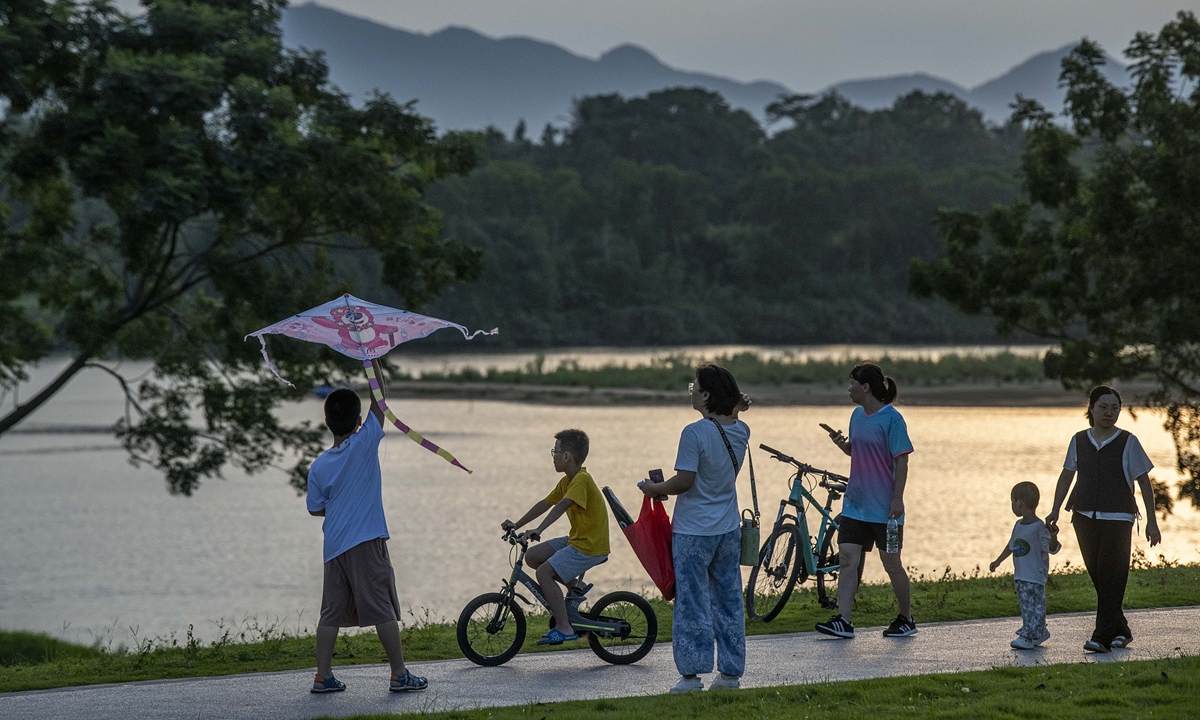
That is where this wide-ranging legal experiment returns to the scale at which environmental protection is ultimately felt - the life outside a person's window.
。
Current article:http://xqha.hencaoaoqingcengchesuomemu.buzz/news/20260826_586048.html
Published on:00:39:53


